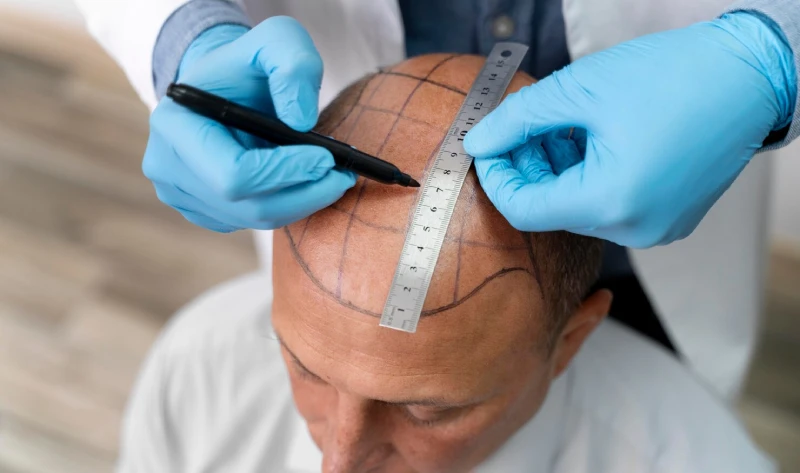
Hair transplant surgery has changed dramatically over the last few decades. What was once considered a procedure mainly associated with actors and celebrities is now a widely discussed solution for men and women dealing with hair loss. In India, hair transplantation has become increasingly accessible, with modern techniques such as FUE, FUT and implanter-based procedures offering more natural-looking results than older transplant methods.
But there is an important question that deserves more attention than simply asking, “How much does a hair transplant cost?”
Is hair transplant surgery actually safe for ‘everyone’?
The short answer is no, not everyone is automatically a suitable candidate for hair transplantation. Hair transplant surgery is generally considered a safe procedure when performed on an appropriate patient by a qualified surgeon in a properly equipped medical facility. However, your cause of hair loss, general health, donor hair availability, scalp condition and expectations all need to be assessed before surgery.
At Chandra Hair Clinic in Delhi, this individual assessment is an important part of planning hair restoration. Led by Dr. Urvashi Chandra, MBBS, MD in Dermatology and a Diplomate of the American Board of Hair Restoration Surgeons, the clinic focuses on diagnosing hair loss and selecting an appropriate restoration approach rather than treating every patient with the same procedure.
Hair transplantation is no longer a niche cosmetic procedure in India.
A January 2026 report by Mint cited an estimate of approximately 350,000 hair transplant procedures being performed in India every year. The same report highlighted concerns around poorly performed procedures and the need for stronger safety standards, particularly because hair transplantation is a surgical procedure involving anaesthesia, tissue removal and implantation.
The broader global numbers also show how quickly the field has grown. According to the International Society of Hair Restoration Surgery (ISHRS), its member physicians performed an average of 15 hair restoration surgeries per month in 2024, while the average number of patients treated per ISHRS member had increased by 20% since 2021. Interestingly, 95% of first-time surgical patients in 2024 were between 20 and 35 years old, showing that people are increasingly seeking treatment earlier rather than waiting until significant baldness develops.
Another interesting change is the growing participation of women. The ISHRS reported a 16.5% increase in female hair-restoration surgical patients between 2021 and 2024.
So, hair transplantation is becoming mainstream. But popularity should never be confused with suitability.
Look at the entertainment and sports industries and you will find that hair has become part of the conversation around appearance, confidence and personal image.
Indian celebrities from Bollywood, television, comedy and sports have been widely discussed in connection with hair restoration and hair-transplant procedures. Names such as Salman Khan, Sanjay Dutt and Kapil Sharma have frequently appeared in media and online discussions about changing hairlines and hair restoration.
However, there is an important distinction here: a celebrity's changing hairline does not prove that they underwent a hair transplant unless the person or a credible source has confirmed it. For example, claims about Virat Kohli having undergone a transplant remain unconfirmed; public photographs alone cannot establish what procedure, if any, was performed.
What the celebrity trend does demonstrate is something broader: hair restoration has become socially acceptable. People who work in front of cameras are not the only ones interested in it anymore. Professionals, entrepreneurs, young adults and women experiencing certain forms of hair loss are also considering treatment.
The important lesson is not that celebrities have access to hair transplants. It is that a natural-looking transplant requires careful diagnosis, planning and surgical skill regardless of who the patient is.
Generally, yes, when performed on the right patient and under appropriate medical conditions.
Hair transplantation is minimally invasive compared with many other surgical procedures, but it is still surgery. Grafts are extracted from one part of the body and implanted into another, usually under local anaesthesia.
Like any surgery, it carries potential risks.
A recent systematic review of hair-transplant complications concluded that hair transplantation is generally safe, with pain, swelling and oedema among the more frequently reported issues.
Possible complications can include:
Most problems are manageable, and serious complications are uncommon. However, they cannot be completely eliminated.
A recent review of modern hair transplantation found that serious complications are rare when experienced providers perform the procedure, but also stressed that appropriate patient selection and informed counselling remain essential.
A consultation should happen before anyone decides to undergo surgery.
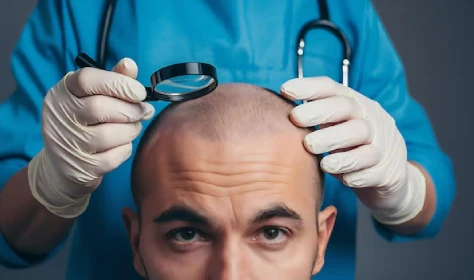
If your hair is suddenly falling out rapidly, the first step should be finding out why. Hair loss caused by nutritional deficiencies, thyroid problems, illness, certain medications or temporary shedding may require medical treatment rather than a transplant.
A transplant uses your existing hair. If the donor area at the back and sides of the scalp does not contain enough healthy, stable follicles, there may not be enough hair to create satisfactory coverage.
Trying to harvest excessively from a weak donor area can create visible thinning.
Severe inflammation, infection or uncontrolled scalp disease may need to be treated before transplantation is considered.
A hair transplant cannot necessarily recreatfe the density or hairline you had at 18.
The surgeon has to work within the limitations of your donor supply. A realistic treatment plan is therefore an important part of safety and satisfaction.
Existing medical conditions, allergies, medications and previous surgical history should be disclosed before the procedure.
Recent research has identified factors such as smoking and diabetes, among others, as considerations that can influence complication risk or surgical outcomes.
This is one reason why a detailed medical history should never be skipped simply because hair transplantation is considered a cosmetic procedure.
One of the biggest misconceptions about hair transplantation is that the procedure is mainly about the technology or machine being used.
It isn't.
The surgeon has to assess the donor area, design the hairline, determine graft placement, extract follicles without unnecessary damage and ensure that grafts are handled and implanted correctly.
The Ministry of Health and Family Welfare's minimum standards for hair-transplant centres specify requirements relating to qualified doctors, nursing and technical staff, emergency arrangements and appropriate infrastructure. The standards also specify medical qualifications and training relevant to doctors performing hair transplantation.
Professional hair-transplant guidelines similarly emphasise that surgical planning, donor harvesting, hairline design, recipient-site creation and surgery should be performed by a qualified physician rather than being delegated to technicians.
This is particularly important when choosing a clinic based on price.
At Chandra Hair Clinic in Delhi, hair transplantation begins with understanding the patient's hair loss, donor area and long-term restoration needs. The clinic offers different hair restoration techniques, including FUE, FUT, Bio-IPT and unshaven FUE, allowing the procedure to be planned according to individual requirements.
The clinic is led by Dr. Urvashi Chandra, a dermatologist and hair-transplant surgeon with extensive experience. Her dermatology background allows hair loss to be assessed medically before deciding whether a patient actually needs a transplant.
Chandra Hair Clinic has performed more than 5,000 hair transplant surgeries, according to the clinic. With an emphasis on evaluating the donor area and planning graft placement carefully, the focus is on achieving natural-looking restoration while making responsible use of the patient's available hair.
The growing popularity of hair transplantation in India is a positive development for people struggling with hair loss. Modern techniques can provide natural-looking and long-lasting restoration when the patient is properly selected and the procedure is carefully planned.
But safe does not mean suitable for everyone.
Your age, diagnosis, donor density, scalp health, medical history, expectations and long-term hair-loss pattern all matter. At Chandra Hair Clinic in Delhi, Dr. Urvashi Chandra's dermatology and hair-restoration background provides a medical foundation for assessing these factors before planning surgery.
If you are considering a hair transplant, don't begin by asking, “How many grafts can I get?”
Begin with the more important question:
“Am I actually a good candidate for a hair transplant, and what is the safest way to restore my hair?”
That is the question that can ultimately make the biggest difference to both your safety and your result.
There is no universal ideal age because the stability and pattern of hair loss matter more than age alone. Younger patients may sometimes need their ongoing hair loss controlled before surgery is considered.
Yes. Grey hair itself does not prevent transplantation, although it can make graft extraction and visual assessment slightly different from working with pigmented hair.
Yes, but the curl and direction of the follicle beneath the skin can make extraction technically more demanding. Surgeon experience with the patient's hair type is therefore particularly important.
It may be possible in some cases, but the decision depends heavily on donor availability and the amount of coverage realistically achievable. Advanced baldness does not automatically mean that unlimited grafts can be harvested.
In selected cases, revision hair transplantation can improve density, repair an unnatural hairline or camouflage visible scarring. However, the availability of donor hair and the reason for the previous poor result have to be assessed first.
No. Transplanted follicles are generally more resistant to pattern hair loss, but your existing non-transplanted hair can continue to thin. Long-term hair-loss management may therefore still be necessary after surgery.