Eyebrows may occupy only a small part of the face, but they can make a surprisingly big difference to how the entire face looks. Sparse, uneven or missing eyebrows can change facial expressions and symmetry, which is why people often look for ways to restore their brows rather than simply filling them in with makeup every morning.
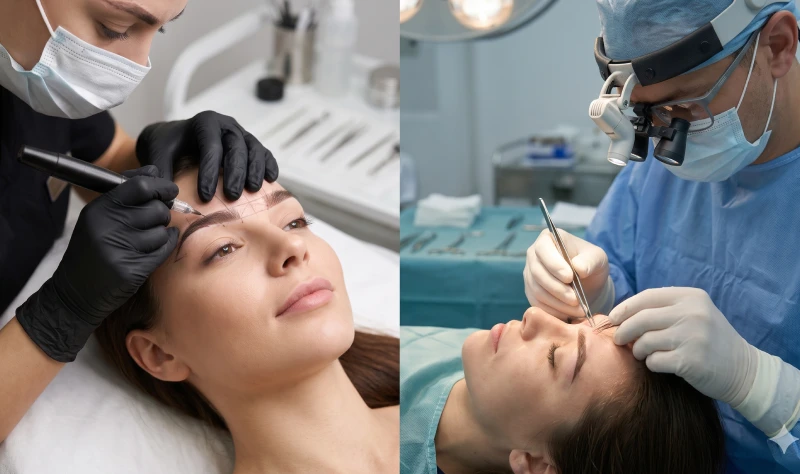
Two options that are often considered are eyebrow reconstruction and microblading. While both can improve the appearance of sparse eyebrows, they work in completely different ways. At Chandra Hair Clinic in Delhi, eyebrow reconstruction is performed as a hair-restoration procedure under the expertise of Dr. Urvashi Chandra, a dermatologist and hair-transplant surgeon, making it an option for people looking for actual hair growth rather than a purely cosmetic imitation of eyebrow hair.
Eyebrow reconstruction is a form of hair transplantation specifically designed to restore missing or severely sparse eyebrow hair.
In the procedure, individual hair follicles are taken from a suitable donor area—usually the scalp—and carefully transplanted into the eyebrow region. Once the transplanted follicles establish themselves, they can grow new hair in the treated area.
The procedure is planned around the natural shape of the eyebrows, including their:
The aim is not simply to make the eyebrows look darker. It is to recreate the appearance of real eyebrow hair.
Eyebrow thinning can happen for many reasons.
Some people naturally have sparse eyebrows, while others experience hair loss because of excessive plucking, ageing, trauma, burns or certain medical conditions. Previous cosmetic procedures can also affect the appearance of the brows.
Eyebrow reconstruction may be considered when there is significant or permanent hair loss and the person wants a longer-lasting restoration.
Unlike simply filling the brows with a pencil or pigment, transplantation provides actual hair follicles in the eyebrow area.
The exact technique depends on the individual's requirements, but the basic process involves several carefully planned steps.
The surgeon first assesses the existing eyebrows and discusses the desired shape and density.
This stage is extremely important because even a small change in eyebrow shape can alter the appearance of the face.
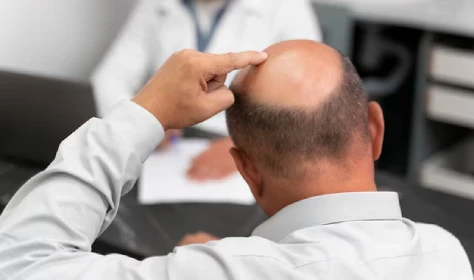
A suitable donor area is identified, usually from the scalp.
The surgeon looks for fine hair that can produce a natural-looking eyebrow once transplanted.
Individual follicles are carefully harvested from the donor area using an appropriate extraction technique.
The follicles are then placed into the eyebrow area at carefully selected angles and directions.
This requires considerable precision. Eyebrow hair does not simply grow vertically like scalp hair; it generally lies flatter against the skin and changes direction across different portions of the brow.
The transplanted follicles eventually begin producing new hair. The initial growth process takes time, and the final appearance develops gradually.
Microblading is a semi-permanent cosmetic procedure, not a hair-restoration procedure.
A technician uses a handheld tool with fine needles or blades to create small strokes of pigment in the superficial layers of the skin. These strokes are designed to resemble individual eyebrow hairs.
The result can make sparse eyebrows appear fuller and more defined without actually growing new hair.
Microblading is therefore closer to cosmetic tattooing than hair transplantation.
| Feature | Eyebrow Reconstruction | Microblading |
| What Is Added? | Actual hair follicles | Pigment |
| Creates Real Hair Growth? | Yes | No |
| Procedure Type | Hair transplantation | Cosmetic pigmentation |
| Longevity | Transplanted follicles can provide long-term hair growth | Pigment gradually fades |
| Appearance | Real hair | Hair-like pigment strokes |
| Suitable For | Significant or permanent eyebrow hair loss and thinning | Cosmetic enhancement of existing brows |
| Maintenance | Regular trimming may be needed | Periodic touch-ups may be required |
| Donor Hair Needed? | Yes | No |
Both procedures can produce an aesthetically pleasing result when performed correctly, but they achieve it differently.
Microblading can create very fine strokes that look convincing from a normal distance. However, the strokes are still pigment sitting within the skin.
Eyebrow reconstruction uses actual hair, which means the brows have genuine strands that interact with light and can be seen from different angles. For someone who has lost a significant amount of eyebrow hair and wants physical hair rather than a drawn effect, this distinction can be important.
The transplanted follicles are intended to provide long-term hair growth.
However, eyebrow reconstruction is not maintenance-free. Because scalp hair is genetically programmed to grow longer than eyebrow hair, transplanted hairs may continue growing and generally need to be trimmed regularly to maintain the desired eyebrow length.
The transplanted hairs can also take time to adapt to their new location and growth pattern.
Yes, it may be considered when repeated plucking has resulted in permanent loss of eyebrow hair.
If the follicles have been damaged or destroyed and the eyebrows no longer grow adequately, transplanting healthy follicles can provide an option for restoring the missing hair.
However, the underlying cause should always be considered before proceeding.
There isn't one answer for everyone because the two procedures are designed for different purposes.
If someone already has eyebrow hair but wants to make it look more defined, microblading may provide a cosmetic solution. But when the primary concern is actual eyebrow hair loss, reconstruction offers something microblading cannot: transplanted follicles that can grow real hair.
This makes eyebrow reconstruction particularly appealing to people who want a long-term hair-restoration solution rather than repeated pigmentation treatments. It also allows the surgeon to recreate the density, direction and shape of the eyebrows using the patient's own hair.
Before choosing a procedure, consider what you actually want to achieve.
If your goal is simply to create the visual impression of fuller eyebrows, a cosmetic pigmentation procedure may be sufficient. If you have substantial hair loss and want to restore actual eyebrow hair, a hair-transplant approach may be more appropriate.
A consultation is particularly important when eyebrow loss is extensive, sudden or related to a medical condition. The cause of the loss, quality of the surrounding skin and availability of suitable donor hair all need to be assessed.
At Chandra Hair Clinic in Delhi, eyebrow reconstruction is offered as part of the clinic's hair-restoration services. Dr. Urvashi Chandra, a dermatologist and hair-transplant surgeon, brings her experience in hair restoration to procedures where precision is particularly important.
Eyebrow transplantation requires more than simply placing grafts in the brow area. The surgeon has to consider facial proportions, hair calibre, graft selection and the natural direction in which eyebrow hair lies.
For someone looking for actual eyebrow restoration, this makes eyebrow reconstruction a fundamentally different option from microblading. Rather than creating the appearance of individual hairs with pigment, the procedure aims to restore real hair where eyebrow hair has been lost.
It may be possible if you have a suitable donor area and the skin in the eyebrow region is healthy enough to support transplanted follicles. A personal assessment is needed to determine whether you are a suitable candidate.
The transplanted follicles retain some of the characteristics of the donor hair, so they may continue growing longer than natural eyebrow hair. Regular trimming can help maintain an eyebrow-like appearance.
The desired shape can be discussed with the surgeon, but it should also suit your facial structure and work with the natural direction of eyebrow growth. An extremely artificial or unusually low shape may not produce a balanced result.
It may be possible in selected cases, but the transplanted area should be fully healed first and the decision should be discussed with the treating professional. Combining procedures is not automatically necessary.
Many patients can achieve their desired restoration in one procedure, but the requirement depends on the amount of hair loss, desired density and individual response. Additional treatment may occasionally be considered if greater density is required.
No. Hair transplantation uses the patient's own follicles because tissue from another person would be recognised as foreign by the immune system and would not be suitable for routine eyebrow transplantation.