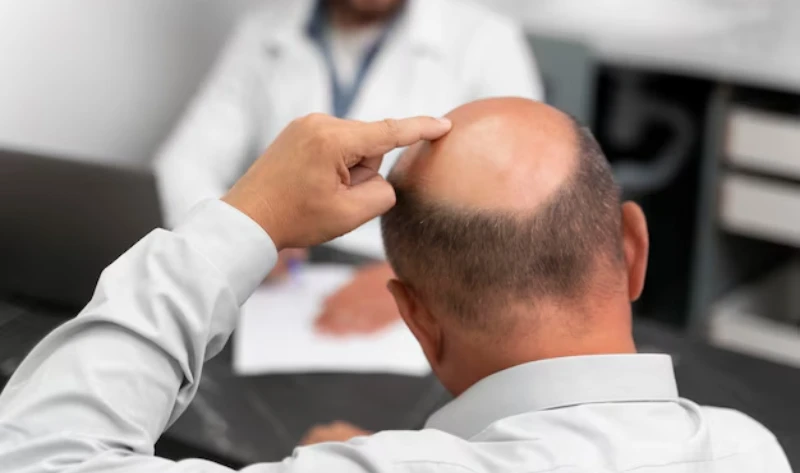
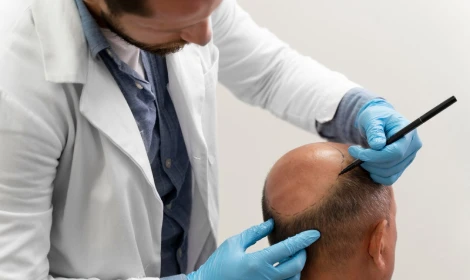
Choosing to get a hair transplant is a big decision. But once you decide to explore the procedure, another question becomes just as important: How do you choose the right hair transplant surgeon?
With so many clinics offering hair transplants in Delhi, it is easy to get distracted by attractive before-and-after photographs, low prices, celebrity claims or promises of high-density results. However, hair transplantation is not simply about moving hair from one part of your scalp to another. The surgeon has to understand your hair loss, assess your donor area, design a natural hairline and plan the procedure around how your hair may change in the future.
This is the philosophy behind Chandra Hair Clinic in Delhi, led by Dr. Urvashi Chandra, an MBBS, MD Dermatology and Diplomate of the American Board of Hair Restoration Surgeons. With more than 16 years of experience in hair transplantation and hair-loss treatment, Dr. Chandra's approach is to first determine what will genuinely benefit the patient; according to the clinic, she recommends hair transplantation only when medicines or treatments such as GFC are unlikely to adequately restore the lost hair.
A hair transplant can have a long-term impact on your appearance. Unlike a temporary cosmetic treatment, transplanted grafts become part of your scalp, which means mistakes in hairline design, graft placement or donor harvesting can be difficult to correct.
The right surgeon should therefore combine medical knowledge, surgical experience and an understanding of hair aesthetics. They should also be willing to tell you when a transplant is not the right option instead of recommending surgery simply because you are willing to pay for it.
Start with the person who will actually perform your procedure, not just the name of the clinic.
Look for a qualified medical professional with specific training and experience in hair restoration. Dermatology or plastic surgery training can provide a strong medical foundation, but dedicated experience in hair transplantation is equally important.
Dr. Urvashi Chandra is an MBBS, MD Dermatology, hair-transplant surgeon and cosmetic dermatologist, and holds Diplomate status with the American Board of Hair Restoration Surgeons. Her professional history also includes working as a hair-transplant surgeon with DHI after completing her MD in Dermatology.
Hair transplantation involves thousands of small decisions. How the donor graft is extracted, how it is handled, where it is placed and at what angle can all influence the final appearance.
Therefore, don't just ask, “How many years has the clinic been open?” Ask about the surgeon's own experience with hair transplantation and the techniques they regularly perform.
Chandra Hair Clinic states that it has more than 16 years of experience in dermatology, hair transplantation and hair-loss treatments and has performed more than 5,000 successful surgeries, according to its website.
Before-and-after photographs can tell you a lot—if you know what to look for.
Don't focus only on dramatic transformations. Look for patients with hair loss patterns similar to yours and check whether the photographs show consistent lighting, angles and hair length.
Pay particular attention to the hairline, density, donor area and overall naturalness. A good result should not look like a clearly transplanted hairline; it should blend naturally with the patient's existing hair.
The hairline is one of the most visible parts of a hair transplant, so it should never be treated as a standard template.
A surgeon should consider your age, facial features, existing hair density, donor supply and potential future hair loss while designing it. Making the hairline excessively low may look attractive initially but can create problems later if the surrounding native hair continues to thin.
A good surgeon should be able to explain why a particular hairline and graft distribution are being recommended for you.
This is one of the most important questions to ask before booking a transplant.
Some clinics may have a doctor involved in consultation and planning while parts of the procedure are carried out by technicians. You should understand exactly which parts of your surgery will be performed by the surgeon and which will be handled by the supporting team.
At Chandra Hair Clinic, the clinic states that its Bio-IPT procedure is performed entirely by a qualified and experienced surgeon, including graft extraction and implantation.
There is no single hair-transplant technique that is best for every patient.
Depending on your hair loss and donor area, your surgeon may recommend FUE, FUT, Bio-IPT or another approach. The decision should be based on your individual requirements rather than the fact that one technique happens to be more popular or more expensive.
A good consultation should explain the advantages, limitations, recovery and expected results of the recommended technique.
Bio-IPT, or Biological Implanter Pen Technique, is one of the hair-restoration approaches offered at Chandra Hair Clinic. According to the clinic, grafts are extracted using ultra-fine punches and implanted using specialised implanters, with the procedure performed by a qualified surgeon rather than being delegated entirely to technicians.
The clinic states that Dr. Urvashi Chandra has been performing Bio-IPT hair transplantation at Chandra Clinic since 2015. The technique is intended to provide precise graft placement while maintaining a natural-looking hairline and good coverage.
Whether Bio-IPT, FUE or FUT is suitable for you should still be decided after examining your scalp and donor area. The technique should serve the patient's needs—not the other way around.
A hair transplant does not create new hair. It redistributes hair from one area of your scalp to another.
That makes your donor area one of the most valuable resources you have. A surgeon should assess its density, quality and how much hair can safely be harvested without making the back or sides visibly thinner.
Be cautious if someone promises a very large number of grafts without properly assessing your donor supply.
A transplant restores areas that have already lost hair, but it does not necessarily stop future hair loss in your untreated native hair.
Ask your surgeon what can be done to protect your existing hair and whether medical treatment should form part of your long-term plan. This is especially important for younger patients whose pattern of hair loss may still be developing.
At Chandra Hair Clinic, the clinic states that hair transplantation is recommended only when Dr. Chandra believes simpler medical treatments or GFC therapy are unlikely to provide sufficient recovery.
Cost naturally matters, but it should not be the deciding factor.
A very low quote may look attractive initially, but you need to know what is included, who performs the procedure, how many grafts are planned and what kind of aftercare is provided. At the same time, paying the highest price does not automatically guarantee the best result.
Instead of asking only, “How much does it cost?”, ask “What am I getting for that cost?”
A good consultation should feel like a conversation rather than a sales pitch.
The surgeon should examine your hair loss, discuss your expectations, explain your options and tell you honestly if a transplant is not currently advisable. You should leave the consultation understanding the recommended number of grafts, technique, expected outcome and limitations.
This is often one of the clearest ways to judge whether a surgeon is genuinely focused on your long-term result.
The best hair transplant surgeon is not necessarily the one promising the most grafts or the most dramatic transformation.
Look for someone who understands that natural-looking hair restoration is a long-term process. The surgeon should protect your donor area, plan for possible future hair loss, create a hairline that suits your face and choose a technique based on your individual needs.
At Chandra Hair Clinic in Delhi, Dr. Urvashi Chandra's dermatology background and dedicated experience in hair transplantation form the basis of the clinic's approach to hair restoration. Whether you ultimately need medical treatment, GFC, FUE, FUT or Bio-IPT, the most important step is to first understand what your hair actually needs.
After all, choosing a hair transplant surgeon should not be about finding the person who promises the biggest transformation. It should be about finding the surgeon you can trust with your hair, your donor supply and your long-term appearance.
Yes. A personal consultation allows the surgeon to examine your scalp, understand your expectations and determine whether transplantation is appropriate for you.
Absolutely. Comparing treatment plans from qualified surgeons can help you understand whether the recommended graft number and technique are reasonable.
Yes. Asking how the clinic handles poor growth, unnatural hairlines or previous transplant complications can give you a better idea of how responsibly it approaches hair restoration.
Not necessarily. The quality of graft handling, hairline design, donor management and long-term planning matters more than simply the number of grafts performed.
Take details of any previous hair-loss treatments, medications or relevant medical history, along with photographs showing how your hair loss has changed over time if you have them.
If your hair loss is rapidly progressing or its cause has not been established, the surgeon may recommend stabilising or treating the underlying problem before considering transplantation.