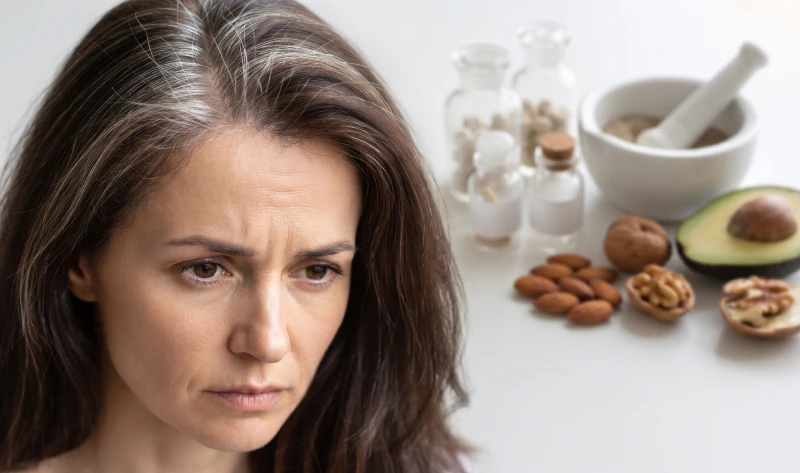
Finding more hair than usual on your pillow is worrying enough. Then you notice a few more white strands in the mirror, and suddenly you start wondering whether the two could be connected.
Sometimes, nutrition does play a role in both hair loss and premature greying. But it is important not to assume that every thinning hairline or early white hair is caused by a vitamin deficiency. Genetics, age, hormones, medical conditions, stress, smoking and other factors can all influence hair growth and pigmentation.
At Chandra Hair Clinic in Delhi, hair concerns can be evaluated from both a scalp and medical perspective. Dr. Urvashi Chandra, an expert hair-restoration specialist, can assess whether nutritional factors may be contributing to a patient's hair concerns and whether blood tests or other investigations are appropriate.
So, which vitamins and minerals deserve attention when hair starts falling or turning white earlier than expected? Let's look at the evidence. But first, let’s understand the correlation between vitamin deficiency and hair loss.
Yes, certain nutritional deficiencies can contribute to hair loss, particularly when they are significant. Hair follicles are among the body's most metabolically active structures, so inadequate nutrition can affect their normal growth cycle.
However, hair loss has many possible causes. A recent systematic review found associations between androgenetic alopecia and deficiencies or imbalances involving vitamin B, vitamin D, iron and zinc, but also noted that the evidence is not consistent across all studies.
Vitamin B12 is involved in DNA synthesis and the normal functioning of cells, including rapidly dividing cells. Since hair follicles continually produce new cells, severe B12 deficiency can affect hair growth.
B12 deficiency has also been associated with premature hair graying. A study of young Indian people with premature graying found significantly lower serum B12 levels compared with controls.
People at higher risk of B12 deficiency can include those with very limited animal-product intake, certain gastrointestinal conditions and people taking some medications that interfere with B12 absorption.
Good dietary sources include eggs, milk and other dairy products, fish, meat and poultry. Vegetarians and vegans may need fortified foods or supplementation depending on their individual nutritional status.
Vitamin D is another nutrient that frequently appears in discussions about hair loss.
Vitamin D receptors are present in hair follicles, and research has found associations between low vitamin D levels and several hair-loss conditions. However, an association does not automatically mean that vitamin D deficiency is the sole cause of someone's hair loss.
If a blood test confirms vitamin D deficiency, correcting it is important for overall health as well as potentially addressing a contributing factor to hair concerns.
Iron is involved in several biological processes required for normal hair follicle activity. Low iron stores, often reflected by low ferritin, have been associated with certain types of hair shedding.
The relationship is particularly relevant in people who experience heavy menstrual bleeding, follow restrictive diets or have other causes of iron deficiency.
Interestingly, low ferritin has also been associated with premature hair graying in research involving young Indian participants.
That does not mean everyone with hair fall or white hair should automatically take iron. Excess iron can also be harmful, so supplementation should ideally follow appropriate testing and medical advice.
Folate is another B vitamin involved in DNA synthesis and cell division.
Because hair follicles continuously produce new cells, adequate folate is important for normal follicular activity. Some research has reported lower folate levels in people with premature graying, although the evidence is not as strong or consistent as it is for some other nutritional factors.
Folate can be obtained from foods such as leafy green vegetables, legumes, citrus fruits and fortified grains.
If a deficiency is suspected, a doctor can decide whether testing is appropriate.
Biotin, also known as vitamin B7, has become almost synonymous with hair supplements.
There is a good reason for the association: severe biotin deficiency can cause hair loss. The problem is that genuine biotin deficiency is relatively uncommon, and there is limited evidence that taking additional biotin improves hair growth in people who already have adequate levels.
In other words, more biotin does not automatically mean more hair.
There is another reason to be cautious with high-dose biotin supplements: biotin can interfere with certain laboratory tests and potentially produce misleading results.
So before taking a high-dose “hair vitamin”, it is worth checking whether you actually need it.
It can contribute in some cases, but genetics remains one of the biggest factors behind when hair starts turning grey.
Premature hair graying has been associated with nutritional deficiencies involving B12, folate, iron and other nutrients. Vitamin D and certain minerals have also been investigated, although the strength of evidence varies between nutrients and studies.
For example, a study in a young Indian population found associations between premature graying and lower ferritin and vitamin B12 levels.
So if someone starts developing white hair unusually early, it can be reasonable to discuss nutritional testing with a hair specialist, particularly when the change is accompanied by hair shedding, fatigue, dietary restrictions or other symptoms.
Copper is not a vitamin, but it is relevant to hair colour because it participates in processes involved in melanin production.
Some studies have found lower copper levels in people with premature graying, although the evidence is not strong enough to say that copper deficiency is responsible for every case of early white hair.
Copper is found in foods including nuts, seeds, legumes, whole grains, shellfish and organ meats.
Copper supplements should not be taken casually because excessive copper can also be harmful.
There is no single blood test that can explain every case of hair loss or early greying.
Depending on your symptoms, diet, medical history and examination, a hair expert may consider tests such as:
| Nutrient/Marker | Why It May Be Relevant |
| Vitamin B12 | Deficiency can affect cell production and has been associated with premature graying. |
| Vitamin D | Low levels have been associated with some hair-loss conditions. |
| Ferritin/Iron | Low stores can contribute to some forms of hair shedding. |
| Folate | Important for DNA synthesis and cell division. |
| Zinc | Important for normal cell and follicle function. |
| Copper | Involved in melanin production. |
| Thyroid Tests | Thyroid disorders can cause hair loss and premature graying. |
Sometimes, but expectations need to be realistic.
If a nutritional deficiency is genuinely contributing to increased shedding, correcting it can allow the hair-growth cycle to normalise over time. However, hair grows slowly, so improvement is rarely immediate.
The situation is different with established genetic hair loss. Correcting a deficiency may improve overall hair health but will not necessarily reverse androgenetic alopecia.
Similarly, hair that has already turned grey because its pigment-producing cells have been permanently lost may not return to its original colour simply by taking vitamins. Some cases associated with reversible nutritional or medical problems may improve after the underlying issue is treated, but this is not guaranteed.
Consider getting your hair loss evaluated if:
At Chandra Hair Clinic, a professional assessment can help distinguish nutritional hair loss from conditions such as pattern hair loss, scalp disorders or other causes of shedding. This is particularly useful because treating the wrong cause can delay the treatment that your hair actually needs.
When hair starts falling or turning white early, it is tempting to reach for a bottle labelled “hair vitamins.” But healthy hair is not dependent on one magic nutrient.
A balanced diet, adequate protein, good overall health and appropriate treatment of medical conditions all matter. If a deficiency is present, correcting it can be an important part of hair-loss management—but taking nutrients you do not need is unlikely to provide extra benefit.
At Chandra Hair Clinic in Delhi, Dr. Urvashi Chandra can evaluate the pattern and extent of hair changes and determine whether nutritional factors may be contributing to the problem. Once the underlying cause is understood, treatment can be much more targeted.
Ultimately, the goal is not simply to take more vitamins. It is to find out what your hair is actually missing and treat that specific problem.
Staying hydrated supports normal body function, but simply drinking extra water cannot correct a vitamin or mineral deficiency. A confirmed deficiency requires appropriate dietary changes or supplementation.
No. A well-planned vegetarian or vegan diet can provide adequate nutrition, although nutrients such as B12 require particular attention because reliable dietary sources are more limited.
Yes. Stress has been investigated as a possible contributor to premature graying, although genetics and age remain important influences and the relationship is complex.
Usually not. Hair loss can have multiple causes, so your doctor may combine your medical history, scalp examination and selected laboratory tests to determine the likely cause.
Eggs provide protein and several nutrients, but no single food can guarantee protection against deficiency-related hair loss. Overall dietary variety and adequate intake of essential nutrients matter more.
Not usually. If a specific nutritional or medical problem is contributing to premature graying, treating that problem may help in some cases, but there is no vitamin supplement proven to reliably restore natural hair colour in everyone.