"Do transplanted hair last?" and "What is the life of hair after a hair transplant?" are very common questions that anyone planning to undergo a hair transplant thinks about.
Anyone experiencing hair loss and considering a hair transplant naturally has these questions in mind: If I undergo a hair transplant, will the transplanted hair last, and how long will it last?
A person may also worry about losing the transplanted hair soon after the procedure because, if that happens, the entire purpose of undergoing a hair transplant would be affected.
So, let us understand the factors responsible for making a hair transplant last for a very long time.
The fact is that transplanted hair can last a lifetime. There is no expiry date for transplanted hair; however, certain factors play an important role in ensuring that the results remain permanent.
Let us understand these factors in detail.
The most important factor affecting the success and longevity of a hair transplant is the health of the donor area before the procedure.
The operating surgeon must properly assess the donor area before deciding whether a hair transplant should be performed. Only when the donor area is healthy and suitable for extraction should the procedure be planned.
If there is thinning or miniaturization of hair in the donor area, it indicates that the area may not be suitable for extraction and transplantation.
If weak and thin hair are extracted for transplantation, the results may not be long-lasting. The transplanted hair may survive for one or two years, after which it may begin to fall.
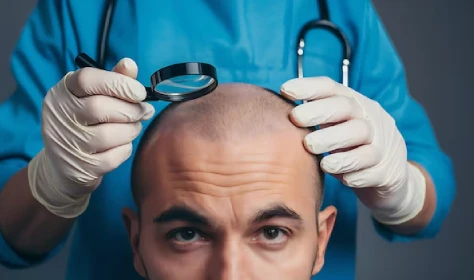
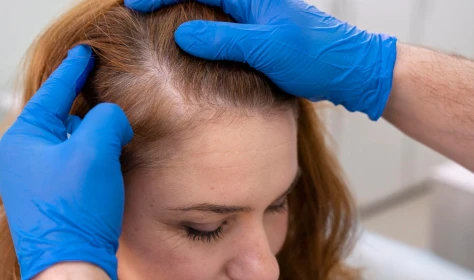
To ensure that the selected donor area contains healthy and strong hair, a trichoscopic analysis of the donor area is absolutely essential. Only through trichoscopic analysis can we accurately assess donor density and rule out any signs of miniaturization.
The second major factor affecting the longevity of a hair transplant is the technique used during the surgery.
Hair grafts extracted from the scalp, beard, or any other body area are delicate and fragile tissues. They can easily get damaged during the process of extraction and implantation.
Therefore, it is extremely important that the extracted grafts are handled very gently throughout the procedure.
At Chandra Clinic, the procedure is not handed over to technicians. The entire process is performed by senior hair transplant surgeon Dr. Urvashi Chandra.
Since hair roots are delicate structures and need careful handling, no part of the surgery, including extraction or implantation, is delegated to technicians.
The implantation process is performed using a gentle "no-touch-to-root" technique, where grafts are implanted using implanter pens.
These Choi implanter pens are specialised instruments that ensure the root portion of the graft is not touched during implantation. The graft is handled only from the skin portion, reducing the risk of damage to the roots.
The complete implantation process is performed by the doctor herself.
The third major factor affecting the longevity of a hair transplant is how you maintain your transplanted hair and overall hair health after the surgery.
It is extremely important to maintain a healthy lifestyle, which includes eating a nutritious diet, sleeping well, and exercising regularly. These are the key pillars for maintaining healthy hair.
Hair roots are living structures and among the fastest-growing tissues in the human body. Therefore, their nutritional requirements are very high.
After a hair transplant, it is essential to maintain a healthy and balanced diet, follow a good lifestyle, and avoid unnecessary stress so that the transplanted hair receives adequate nutrition and grows properly.
It is also important that patients use medications such as minoxidil and finasteride and undergo PRP sessions as recommended by the doctor. These treatments help support the transplanted hair and maintain the existing natural hair.
The fourth important factor affecting the longevity of transplanted hair is the location of the donor area from which the grafts are extracted.
Even if the donor area appears healthy and strong, it is important to evaluate how the patient's hair loss may progress over the next 10 to 20 years.
If there is a strong family history of advanced hair loss, such as Grade 6 or Grade 7 baldness, there is a possibility that the patient may also progress to a similar level of hair loss in the future.
This means that the existing crown area may continue to thin further, and the donor area may become narrower over time.
Therefore, if there is a family history of Grade 7 hair loss, hair grafts should be extracted from the central portion of the donor area rather than moving towards its edges.
This is because, over time, the edges of the donor area may also become affected by hair loss.
This also means that the edges of the donor area are not always permanent zones and may not be suitable for extraction.
Hair should always be extracted from the safe donor area, also known as the safe zone, which is located in the central part of the donor area.
If all these factors are carefully considered and properly managed before, during, and after a hair transplant, the transplanted hair can undoubtedly last for a very long time.