Seeing more hair on your pillow, a widening part, a receding hairline or a bald patch can leave you wondering what to do next. For many people, the first treatment they hear about is minoxidil. For others, especially when hair loss has become more advanced, a hair transplant starts to look like a more practical way to restore lost coverage.
But these two treatments do very different things.
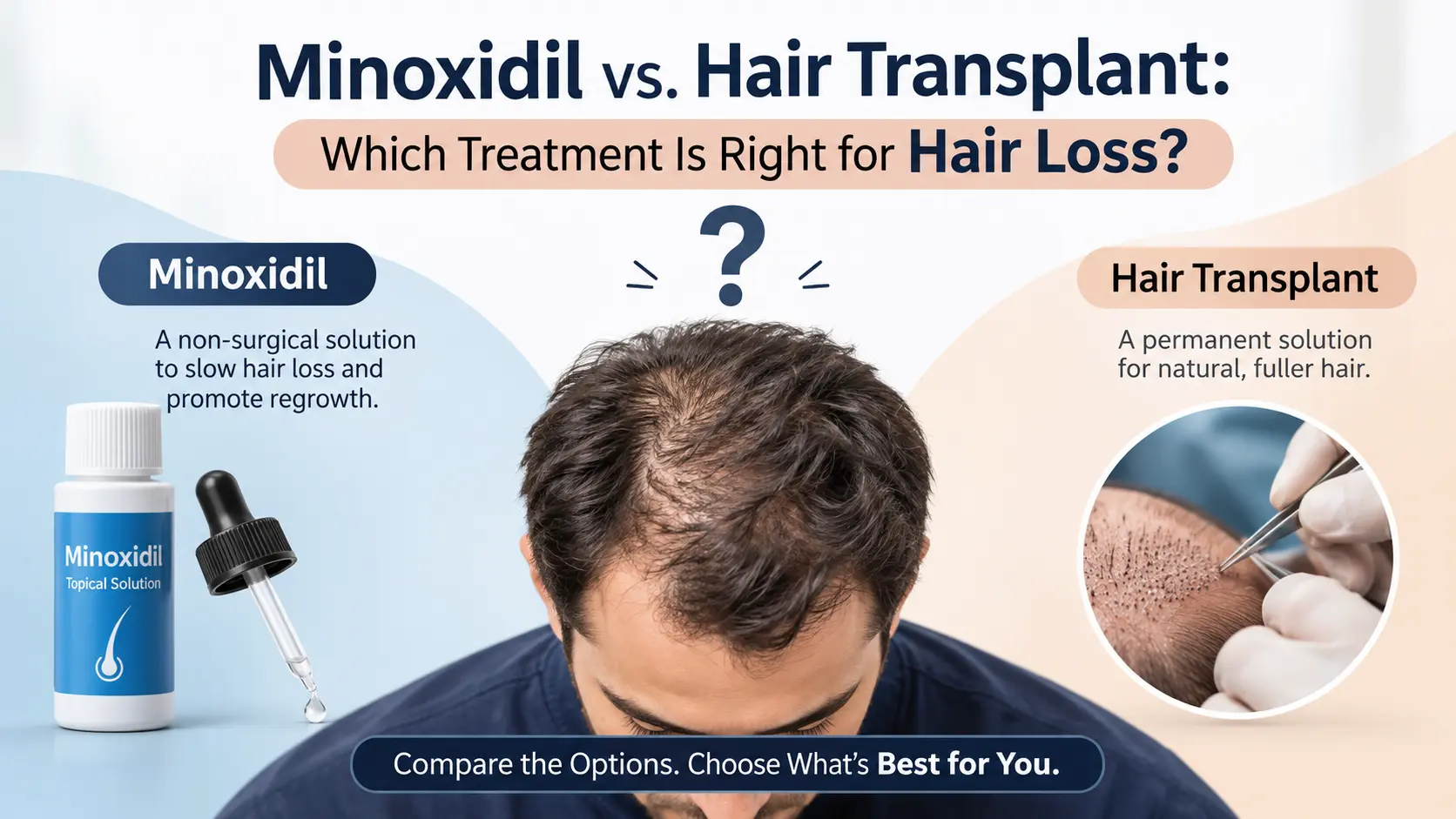
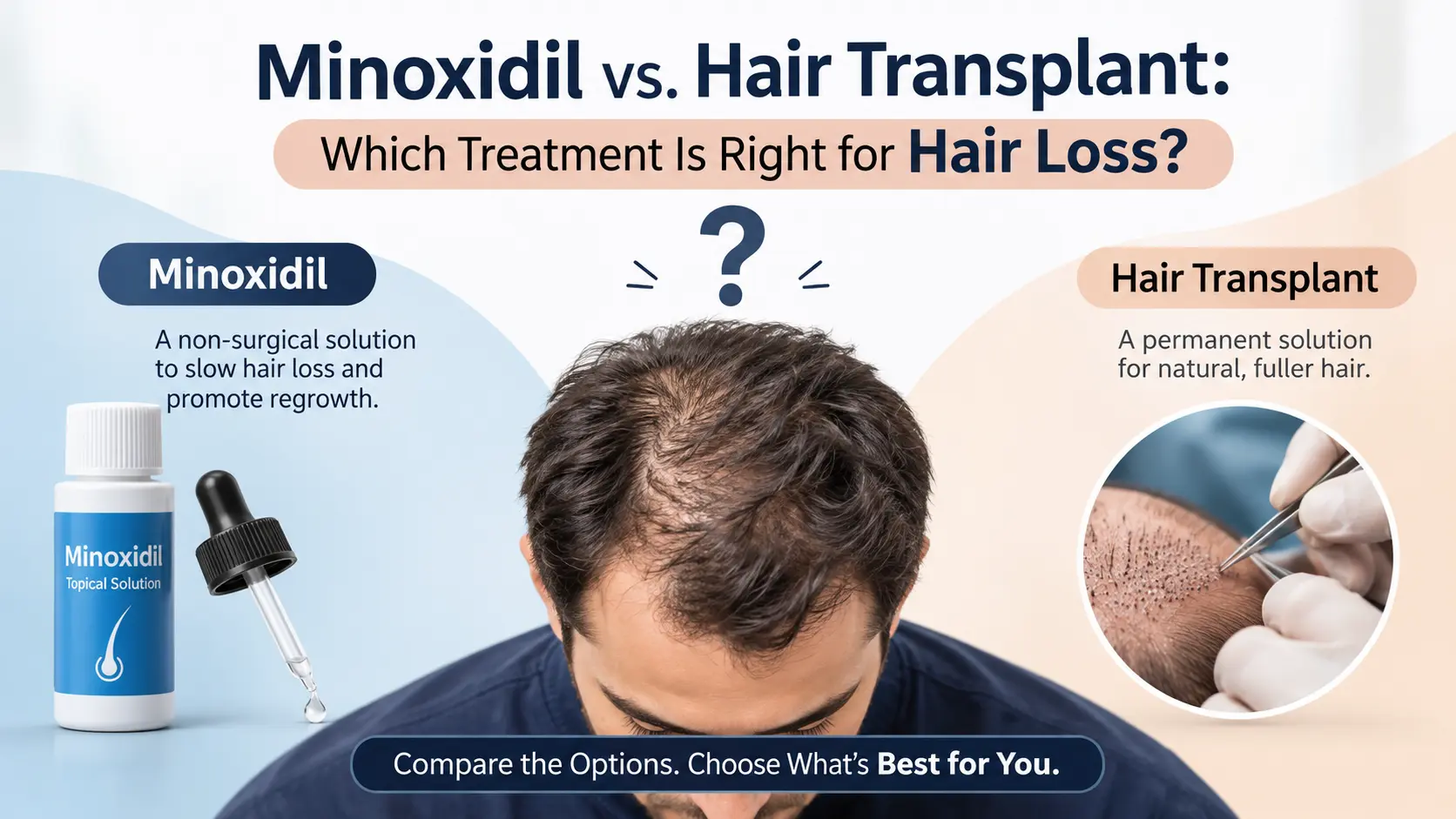
Minoxidil is a medication that can help reduce hair loss and stimulate growth from existing follicles. A hair transplant, on the other hand, involves moving healthy hair follicles from a donor area to areas where hair has become thin or bald. So the right choice depends less on which treatment sounds more powerful and more on how much hair you have lost, whether your follicles are still producing hair and what kind of result you want.
At Chandra Hair Clinic in Delhi, Dr. Urvashi Chandra evaluates the cause, pattern and extent of hair loss before deciding whether medical treatment, hair restoration or a combination of approaches is appropriate.
Minoxidil is a topical hair-loss medication used for certain forms of pattern hair loss. It can stimulate hair growth, reduce ongoing hair loss and improve the thickness of existing strands in some people.
It tends to be more useful when there are still functioning, miniaturised follicles that can respond to treatment. It cannot, however, recreate a completely bald area where functional follicles have been permanently lost.
A hair transplant is a surgical hair-restoration procedure in which healthy hair follicles are taken from a donor area, usually the back or sides of the scalp, and placed into areas affected by thinning or baldness.
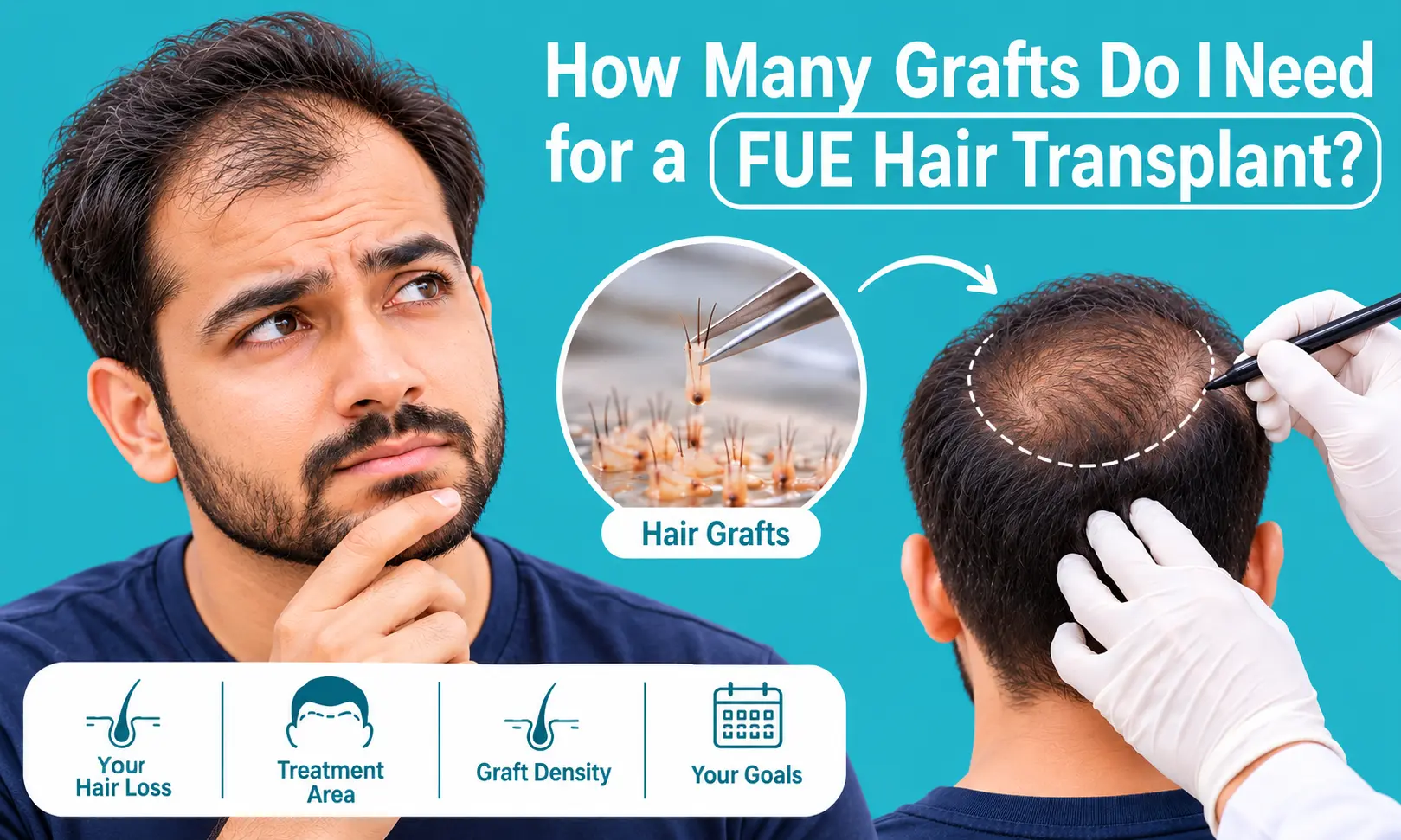
With FUE (Follicular Unit Extraction), individual follicular units are extracted from the donor area and transplanted into carefully planned recipient areas.
Unlike minoxidil, a transplant does not depend on stimulating a completely bald area to produce a new follicle. Instead, it redistributes existing healthy follicles to areas where greater coverage is needed.
Modern transplantation focuses on placing individual follicular units in a way that follows the natural direction, angle and distribution of hair, allowing the result to blend with existing hair.
| Factor | Minoxidil | Hair Transplant |
| Type of treatment | Medication | Surgical hair restoration |
| Main purpose | Helps maintain/thicken existing hair | Restores hair to areas of significant loss |
| Works on | Suitable existing follicles | Transplanted donor follicles |
| Completely bald area | Usually limited benefit | Can restore coverage if suitable donor hair is available |
| Treatment duration | Ongoing use generally required | One procedure can provide long-term restoration |
| Results | Gradual | Gradual growth after transplantation |
| Donor hair required | No | Yes |
| Maintenance | Continued treatment is generally needed | Transplanted hair is intended to provide long-term growth |
| Suitable for everyone? | No | No; candidacy depends on several factors |
The important point is that these treatments are not interchangeable. One is primarily a medical approach to managing hair loss, while the other is a surgical approach to restoring lost coverage.
Minoxidil can be worth considering when hair loss is relatively early or when the scalp is showing thinning rather than extensive baldness.
For example, someone noticing gradual thinning across the crown may still have many miniaturised follicles. Supporting those follicles medically may help improve the appearance of density.
It can also be useful when the immediate goal is to slow progression and preserve existing hair, rather than surgically restore lost areas.
However, not every type of hair loss should automatically be treated with minoxidil. The underlying cause matters, which is why a dermatologist should assess unexplained or sudden hair loss before treatment.
A transplant becomes more relevant when there is significant, stable hair loss and sufficient healthy donor hair to redistribute.
Typical situations may include:
A transplant is not simply a more intensive version of minoxidil. It addresses a different problem: lack of hair coverage in an area where medication alone may not be capable of recreating the lost density.
Yes. In fact, they can sometimes complement each other.
A transplant restores hair to selected areas, but the native hair that was not transplanted can continue to thin if the underlying pattern hair loss remains active. Medical treatment may therefore be recommended to help preserve existing hair and maintain overall density. The American Academy of Dermatology notes that medication may help maintain results after a transplant because native hair can continue to thin over time.
This means that having a hair transplant does not necessarily mean you will never need medical hair-loss treatment.
The two approaches can have different jobs: the transplant restores lost coverage, while medication may help protect the hair you still have.
A hair transplant is not suitable for every person experiencing hair loss.
The surgeon needs to assess:
A good candidate needs both sufficient healthy donor hair and an area capable of supporting transplanted follicles. A dermatologist or hair-restoration surgeon can assess these factors during an examination.
There is no single answer for everyone.
Minoxidil may be appropriate when:
A hair transplant may be considered when:
And sometimes, the most sensible approach involves both.
Minoxidil and hair transplantation should not really be viewed as competing treatments. They address hair loss in different ways.
Minoxidil can help preserve and improve hair from follicles that are still responsive to treatment, making it particularly relevant in earlier stages of hair loss. A hair transplant becomes more relevant when substantial hair has already been lost and there is enough healthy donor hair to redistribute into areas where coverage is lacking.
For someone with mild thinning, starting with medical management may be entirely reasonable. For someone with a receded hairline, established baldness or areas that no longer provide sufficient coverage, a transplant assessment may offer a different route to restoration.
The most important step is therefore not choosing between two names on a list. It is getting the cause, stage and pattern of your hair loss assessed properly, and then choosing a treatment that matches the hair you have today while accounting for what may happen in the future.
Minoxidil works best when viable follicles are still present and generally cannot recreate follicles that have been permanently lost.
Not necessarily in every case, but your dermatologist may recommend medical treatment depending on the cause, stage and activity of your hair loss.
In some patients, yes. Medical treatment may be recommended to help preserve existing native hair that remains vulnerable to ongoing pattern hair loss.
Transplanted follicles are intended to provide long-term hair growth, but the native hair around them can continue to thin, which is why long-term planning is important.
It can take around six to 12 months to properly assess the response, and continued use is generally needed to maintain the benefit.
Some women with female pattern hair loss may be candidates for transplantation, but candidacy depends heavily on the pattern of hair loss and the availability of a suitable donor area.